In my past 20 years in the technology industry, I have often seen the back and forth viewpoints on whether IT is a cost center, or a profit center, for the enterprise. There is good reason for this, as it shapes the ongoing investment for the IT environment. The cost center viewpoint views the underlying business process as the revenue generation, with IT as a cost component in delivery of the service. The profit center viewpoint recognizes that through IT, enterprises are able to enter additional markets, thus driving profitability.
IT isn’t a pure profit center in many cases, but it is woefully insufficient to consider it a cost center. The reason we use technology is to enable cost efficiencies, which enables us to enter new markets which may have previously been unprofitable. An example is using remote expert technologies to deliver services (such as financial consultants in rural areas), where the cost to staff a full time employee may have made that venture untenable. While IT enables an expansion of a firms potential revenue generating opportunity, in the majority of companies the underlying business process drives the revenue. Web enabled transactions for a retailer is a new channel in which commerce can occur, but the fundamental transaction is still a retail transaction. It is the sale which drives revenue. In a financial institution, many transactions are now digitally enabled. I deposit checks via an App. But I don’t create financial transactions because of the app, rather, I create financial transactions because of the need, and the App is just a conduit.
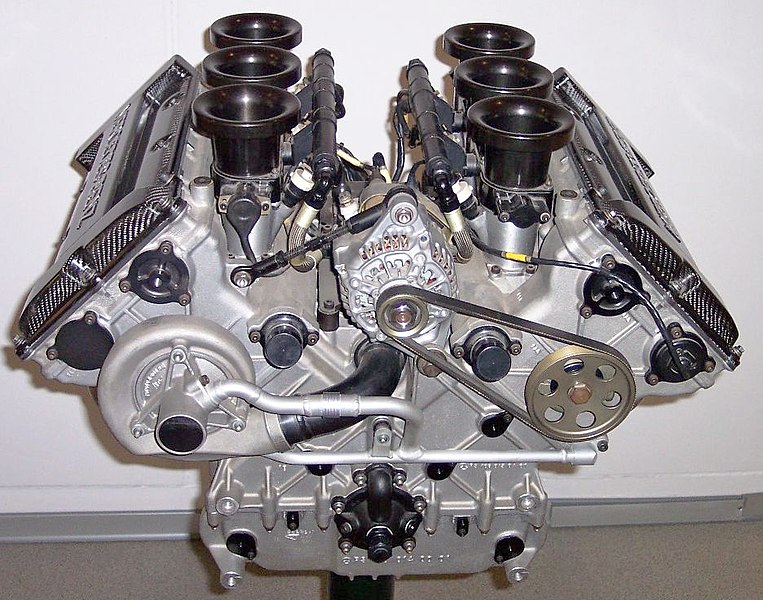
I argue that IT is the efficiency engine for the enterprise. The transition to increased digitization, heightened competitive markets, and globalization has forced industries to create efficiency in process. This has lead to integrated logistics systems and digital transactions which enable a lower cost base for the entire business. All sectors have leveraged technology to lower costs and increase the ability to remain competitive in a global industry, from legal services and retail, to financial services and healthcare.
Understand, every dollar invested in IT is not intended to serve itself. An engine without a payload is just a waste of gas. Every dollar spent on IT infrastructure should yield a greater return in either cost save of an existing process, or increased revenue through being able to enter a previously not profitable channel. Through recognizing IT as the efficiency engine, we recognize that every dollar the enterprise makes relies on IT at some point in its value chain, whether it is procurement, logistics, marketing or processing.
Never before has this been more prescient than now, with the ongoing developments in SDN, Software Defined Wan, and investments in public and private cloud. This is because these initiatives are retooling the engine itself. Historically IT has been the efficiency engine for the enterprise, but we’re increasingly looking to improve the efficiency of its own design. This is akin to the transition to electric motors and hybrids. What is the most important aspect of an electric motor? The most important aspect is that it WORKS and fulfills the requirements of the end user.
What is fundamental in this transition, is to ensure priorities for availability and security. The engine is fundamental to the organization. This does not take away from efficiency and automation, those are the key tenets of the transformations we are undergoing. These HAVE to be improved in the coming years to ensure we have the ability to scale with the exponential growth expected in our networks via the IOT. We need flat or linear spend curve, while managing exponential growth, during the digitization of our companies, and in the presence of disruptive competition. The only way to achieve that is with this retooling. But what must be realized is that these can not come at the expense of availability and security.
The other paradigm which must be understood, is the logistics system for management of the engine itself. Just as the transition to electric engines will require new mechanics and charging areas to make them viable, a critical component in any project is the ongoing maintenance and day 2 support. Will adequate resources be available to operate and manage the network? Are there feet on the street? is it I niche solution in a highly competitive marketplace, which may or may not, pass the 10 year test?
We’ll need to transition our resources to support these new capabilities. For enterprises built on traditionally gas powered engines, this will be one of the larger challenges, especially for larger organizations. Larger organizations get significant efficiencies and economies of scale, but they also have to absorb costs at scale. There are simply more resources that need to transition, more processes that need to be refined, more infrastructure in place.
Threading the needle is to be able to make use of the most intellectual capital and organizational competencies that currently exists within the organization, and minimize spend on transition to newer technologies. The existing infrastructure will not go away, there will be no flag day. We will need to take the infrastructure we have built, value it where it fits in the value chain, and integrate more efficient processes and capabilities.
This is the only way we will scale while meeting the availability and security requirements our core business processes rely on.

 Strongedge.io